
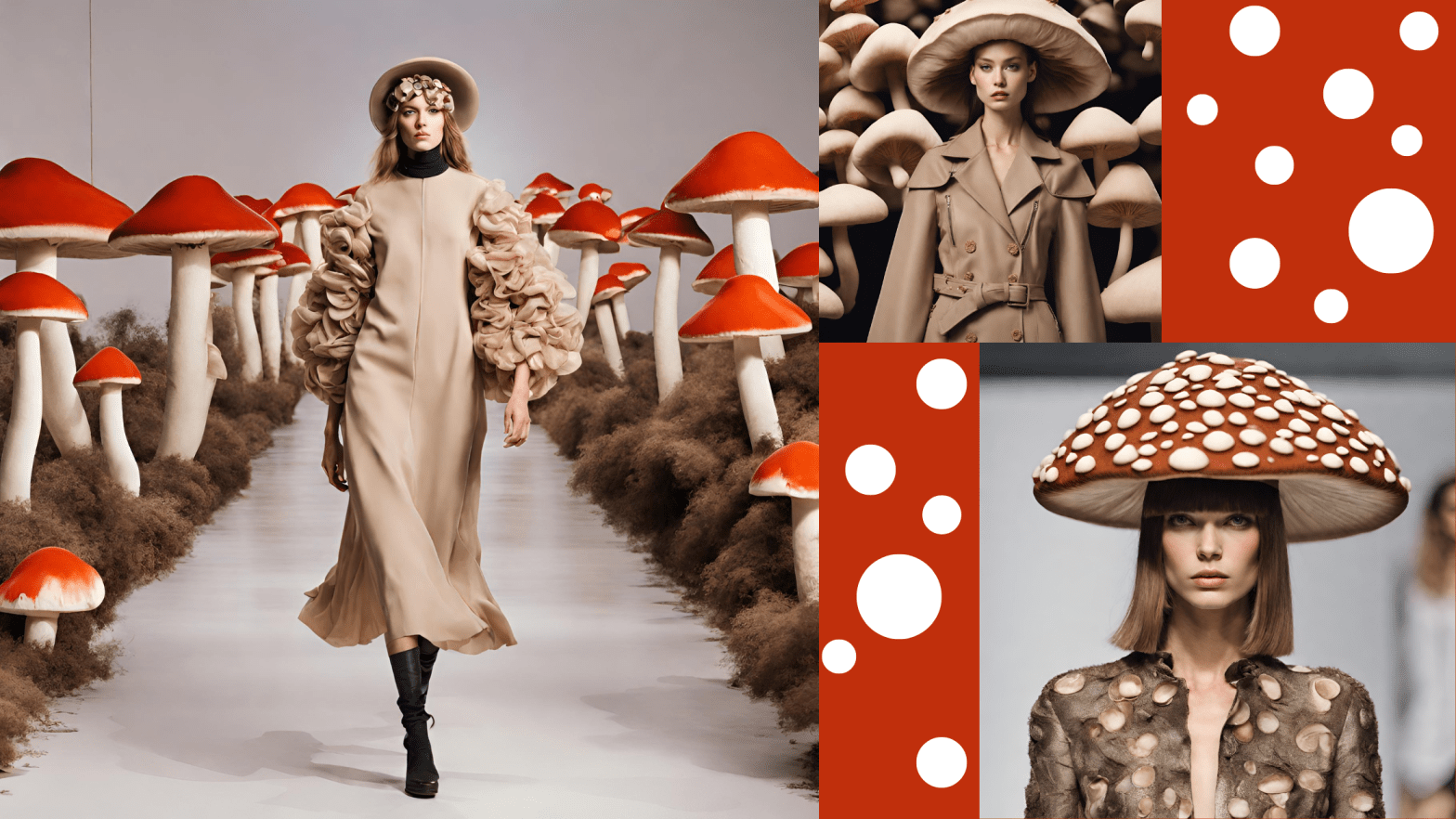
The production of fast fashion is a huge contributor to pollution of soil and water worldwide. The demand for clothing that is quickly trashed but created essentially overnight by under paid workers will continue to rapidly destroy the planet until alternatives are accepted by consumers and the demand is rerouted.
An exciting new development is the use of mycelium in the creation fashion fabric. Mycelium is the network of all the threads of a fungus, also called the root of the mushroom. Recent innovations have been using mycelium to develop many things, including plastics, furniture, and package alternatives. It seems the uses are endless.
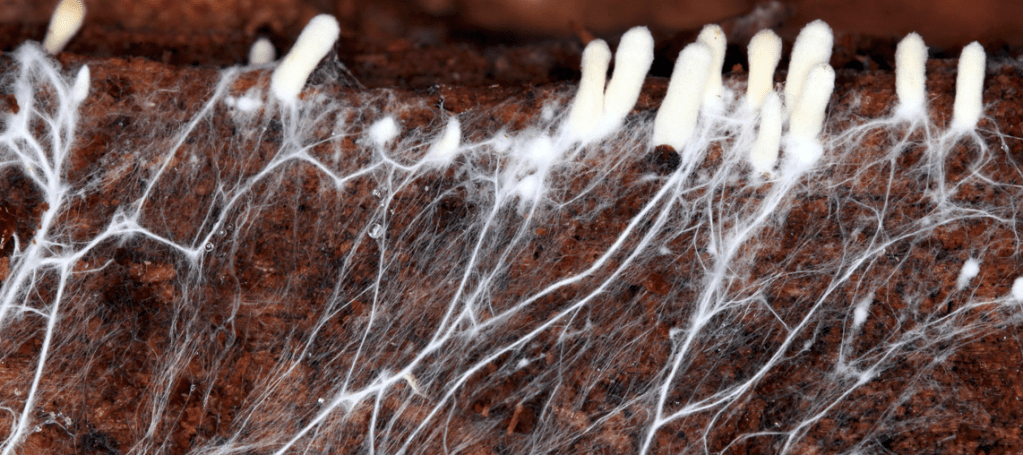
Mycelium threads in growing medium. Image source: https://www.sfchronicle.com/projects/2023/mushroom-farming/
MycoTEX
Mycelium textile aka MycoTEX, created by Dutch textile designer Aniela Hoitink and the NEFFA New Fashion Factory, is 100 percent biodegradable. The fabric is created by growing the organism in a mould customized by the specifications of the wearer- creating a custom garment, which can be adjusted to adapt to fashion trends and can be repaired when needed without looking “mended”. Once the garment has served its use, it can be composted.
Mycotex does not need to be machine washed. Just wiped clean. Sizes can be inclusive to all, because the molds are created by body scans.
MycoWorks
In the United Stated, Phil Ross and his team at the San Francisco-based MycoWorks has created a “leather” called Reishi™ used for clothing, accessories, and furniture from the mycelium of mushrooms. They say the textile is non-toxic, waterproof, and fire-resistant. It can be as thin as paper for dresses and lampshades, or incredibly thick for heavy-duty items. In both cases, the fabric is remarkably flexible yet strong.
BoltThreads
BoltThreads describes themselves as “a venture-backed, idea-driven company”. In 2018 they launched Mylo™ material, a lab-grown biomaterial mushroom “leather”. They have collaborated with fashion designers such as Stella McCartney. They grow the mycelium in vertical farming facilities powered by 100% renewable energy. A characteristic of the material is a unique microscopic structure that is similar to animal hides.
Environmental Benefits
- Clothing can be grown locally eliminating the cost and environment impact of overseas shipping and labor.
- There is no sewing or weaving, eliminating traditional unethical labor practices.
- Equipment used to develop the fabric uses existing industrial machines with some alterations allowing businesses to limit startup costs while scaling quickly.
- Since clothing is created using body scanned molds there are no scraps from the cutting room floor making these zero waste clothing.
- According to the National Center for Microbiology mycelium won’t irritate sensitive skin, because it’s naturally antibacterial.
- Because it doesn’t need to be washed, it reduces water use and eliminates detergent chemicals in waterways.
- The discarded garments compost acts as nutritious soil for other plants.
Follow us on Instagram
 Remnants Magazine